Coppicing vs Pollarding: What's the Difference and Why Does It Matter for Wildlife?
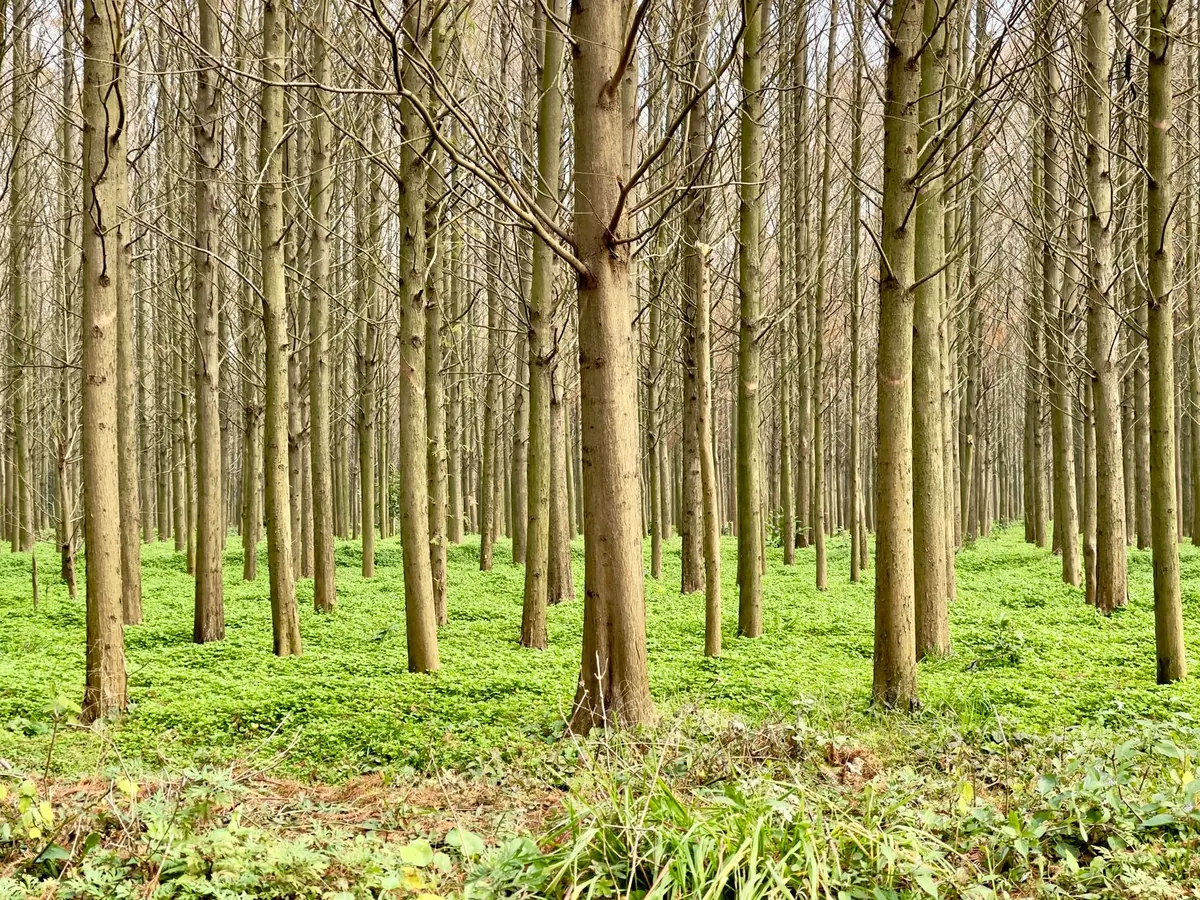
A hazel stool cut hard in January looks brutal. By spring it is throwing up a dozen new shoots; by year five it is a dense thicket of straight poles; by year fifteen it has closed over into shade and the woodland flowers beneath it have gone quiet. That rhythm — cut, regrow, thicken, shade — is what coppicing does, and wildlife responds to it.
Pollarding uses the same trick of repeated cutting, but the cut sits two or three metres up a trunk, out of reach of browsing mouths. Same principle, different architecture, and a noticeably different set of residents. Here's how to tell them apart, and what each one does for wildlife.
What coppicing does
Coppicing means cutting a tree's stems close to the ground — usually within about 5 to 30 centimetres of the stool — and letting it regrow from the base. The stool is the permanent, often ancient, woody lump that survives every cut. Most of the species we value for this are naturally multi-stemmed: hazel, ash, field maple, lime, oak, sweet chestnut, hornbeam, willow and birch to a degree.
Cutting happens in winter, when the tree is dormant. Regrowth is fast because the root system is already established — new shoots are fuelled by a mature network of roots rather than starting from scratch.
Cycle lengths depend on the species and what you want from it. Willow and hazel grown for hurdles, baskets or pea sticks might be cut every three to seven years. Ash, chestnut and oak grown for poles or firewood usually run on twelve to twenty years. Left alone for decades, a stool produces fewer, thicker stems and slowly shades out its own ground flora.
What pollarding does
Pollarding is coppicing raised up the trunk. The tree keeps a single clear stem, and the shoots are cut back at roughly two to four metres — sometimes much higher in old parkland trees. Regular cutting forms a swollen knuckle, or boll, at the top, and it is from this head that the new growth breaks.
The reason was practical. In wood pasture, parkland, hedgerows and along riverbanks, people needed poles, fencing, leaf fodder and firewood while livestock or deer grazed underneath. Cutting at ground level would have meant losing every shoot to the first hungry animal. Cutting high put the regrowth out of reach.
Willows pollarded along a riverbank are the classic image, but the same treatment was given to oak, ash, beech, hornbeam, lime and fruit trees. Pollarded trees can become extraordinarily old, hollowing out slowly while their heads are cut again and again.
The main differences at a glance
- Height of the cut: a coppice is cut at ground level; a pollard is cut two metres or more up a trunk.
- Grazing pressure: coppice regrowth usually needs protection from deer and livestock; pollard regrowth sits naturally out of reach.
- Shape of the tree: a coppice stool is a multi-stemmed clump with no single trunk; a pollard is a tree with a trunk and a swollen head.
- Where it suits: coppice belongs in woodland and hedgerows; pollards belong in wood pasture, parkland, field boundaries, riversides and village greens.
- What it yields: coppice gives many thin poles in short rotations; pollards give smaller quantities of poles and leaves from a tree that stays tall.
- Habitat signature: coppice runs on light and disturbance; pollards run on age, hollows and deadwood up in the canopy.
Why the difference matters for wildlife
Coppice: a habitat built on light
Coppicing resets the clock, and much of the wildlife that depends on it needs that reset. The first year or two after cutting gives bare, warm ground where solitary bees and wasps nest, where reptiles bask, and where woodland flowers — bluebells, wood anemone, primrose, dog violet, yellow archangel — finally get enough light to flower and set seed.
Then the regrowth thickens into a low, tangled thicket, and that is when the birds arrive. Nightingales, garden warblers, willow warblers, whitethroats and blackcaps all nest in dense growth a few years old. Pearl-bordered fritillaries, white admirals and dormice depend on the structure and food plants of that middle stage, particularly bramble, honeysuckle and hazel. As the canopy closes overhead, most of these species move on to the next cut coupe. A wood cut in blocks on rotation keeps every stage present at once, which is why a working coppice holds far more species than the same wood left to grow dark and uniform.
Pollards: a habitat built on age
Pollards offer the opposite: continuity. A hollow old pollard, with a head of decaying wood, water pockets and flaking bark, is a small ecosystem that stays in place for centuries. Bats roost in the rot holes and crevices. Barn owls, little owls, stock doves and jackdaws nest in them. The dead and decaying wood feeds beetles and their larvae, which in turn feed woodpeckers. Old bark and long-standing wood support lichens and bryophytes that simply do not get going on young trees.
Pollarded willows and fruit trees in hedgerows and old orchards give nectar and fruit high up, and their shade cools riverbanks and damp pasture. Where a coppice wood is richest in its youngest years, a pollard is richest near the end of its life — which is exactly why veteran pollards are so hard to replace once they are gone.
Why both methods are struggling
Both need people. Neglect is the commonest problem: an uncut coppice grows into a dull, dark stand, and an uncut pollard becomes top-heavy and eventually splits. Rising deer numbers strip regrowth out of coppices in many woods, while safety felling, changes in farming and development have cleared pollards from field boundaries and parkland. Add the loss of the rural crafts and markets that once paid for the cutting — hurdles, thatching spars, charcoal, firewood — and the economics get harder each decade.
Good woodland management is rarely about leaving things alone. It is about deciding which stage of growth you want, where, and then cutting on a rhythm that keeps it there.
Working in cycles: practical points
- Plan the rotation first. Divide the wood into as many compartments as the rotation has years. A fifteen-year rotation means fifteen coupes, one cut each winter, so every age of growth is present somewhere at any time.
- Cut in winter. From leaf fall to late February the sap is down and disturbance to wildlife is at its lowest. Avoid working on waterlogged ground, where you will churn up the soil and damage roots.
- Cut cleanly and at the right height. For coppice, cut slightly angled just above the previous cut, leaving the stool intact and the bark untorn. For pollards, keep cutting back to the same head rather than working lower down the trunk.
- Protect the regrowth if deer, rabbits or livestock are about. Brushwood laid over the stool, tree guards or temporary fencing all help; the taller the shoots when browsing hits, the better they survive it.
- Leave something behind. Keep a few standards — oak, cherry, rowan — to grow on for timber, birds and insects, and leave some cut material as
Photo: Eric Feng / Pexels