Ancient Woodland vs Secondary Woodland: What's the Difference?
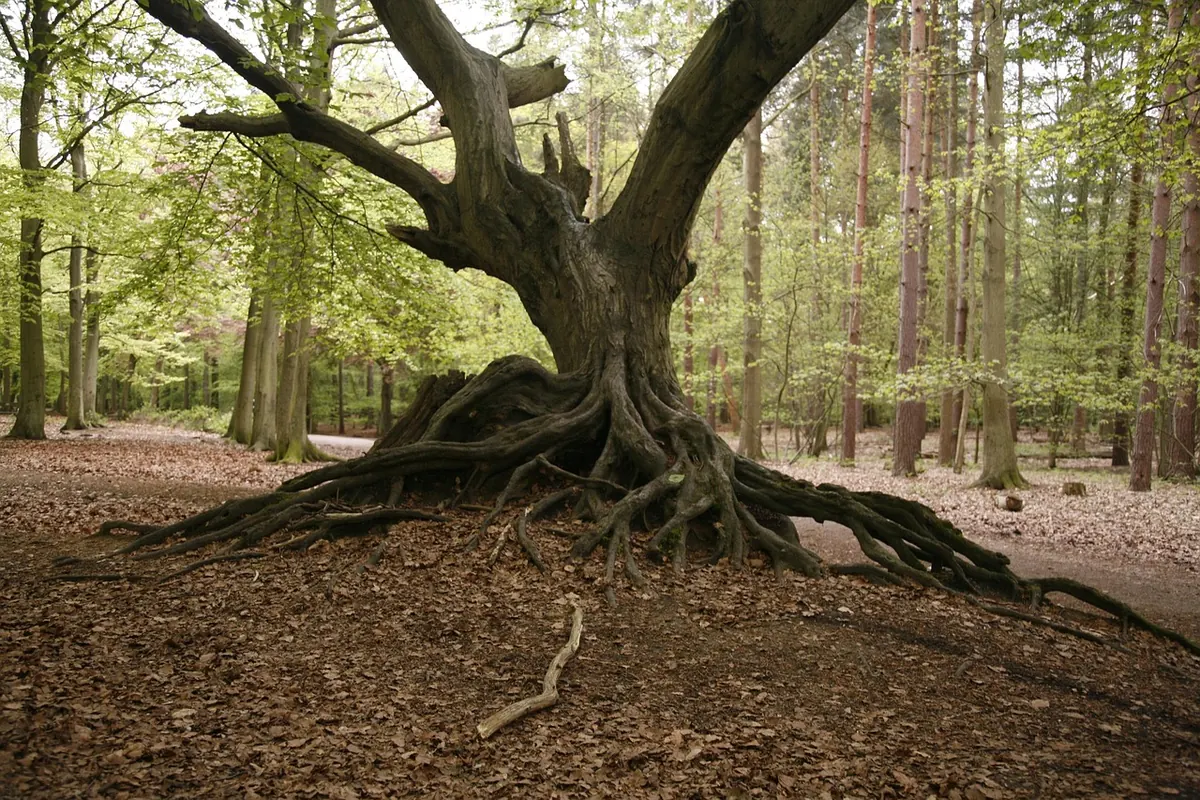
Two woods half a mile apart can look like distant relatives. One is all bluebells, mossy banks and oak trunks furred with lichen. The other is birch, bramble and ivy, pleasant enough but somehow thinner. The difference between them often comes down to a single idea: continuity. One has been woodland for centuries. The other has not, or at least not in any way we can prove.
That distinction shapes everything from which plants grow there to how the wood should be managed. It is also one of the most rewarding things a walker can learn to read from the ground up.
What Counts as Ancient Woodland
In England, Wales and Northern Ireland, ancient woodland is land that has been continuously wooded since at least 1600. In Scotland the cut-off is 1750. Those dates are not random: they mark the point at which map evidence, estate records and planting records become reliable enough to trace woodland back with confidence. If a wood was already there in 1600, it is very unlikely to have been cleared and replanted in the centuries before that, because nobody was keeping the paperwork.
The word "ancient" trips people up. It does not mean untouched, primeval or free of human hands. Most ancient woodland in Britain has been coppiced for poles and firewood, grazed by livestock, or dotted with pollarded trees. What makes it ancient is that the woodland cover never went away. The soil was never ploughed, the tree roots never stopped, and the community of fungi, invertebrates and slow-spreading plants kept going.
You will also come across the term PAWS — plantation on ancient woodland site. These are old woods that were replanted, often with conifers in the twentieth century. The trees may look wrong, but the ground beneath them can still carry the ancient signature.
What Secondary Woodland Is
Secondary woodland is woodland that has grown up on land which was previously something else: arable fields, pasture, heath, a quarry floor, a railway cutting, or a clearing that was abandoned after felling. It can be a hundred years old or fifteen. Some of it is dull and uniform; some of it is gloriously scruffy and full of wildlife.
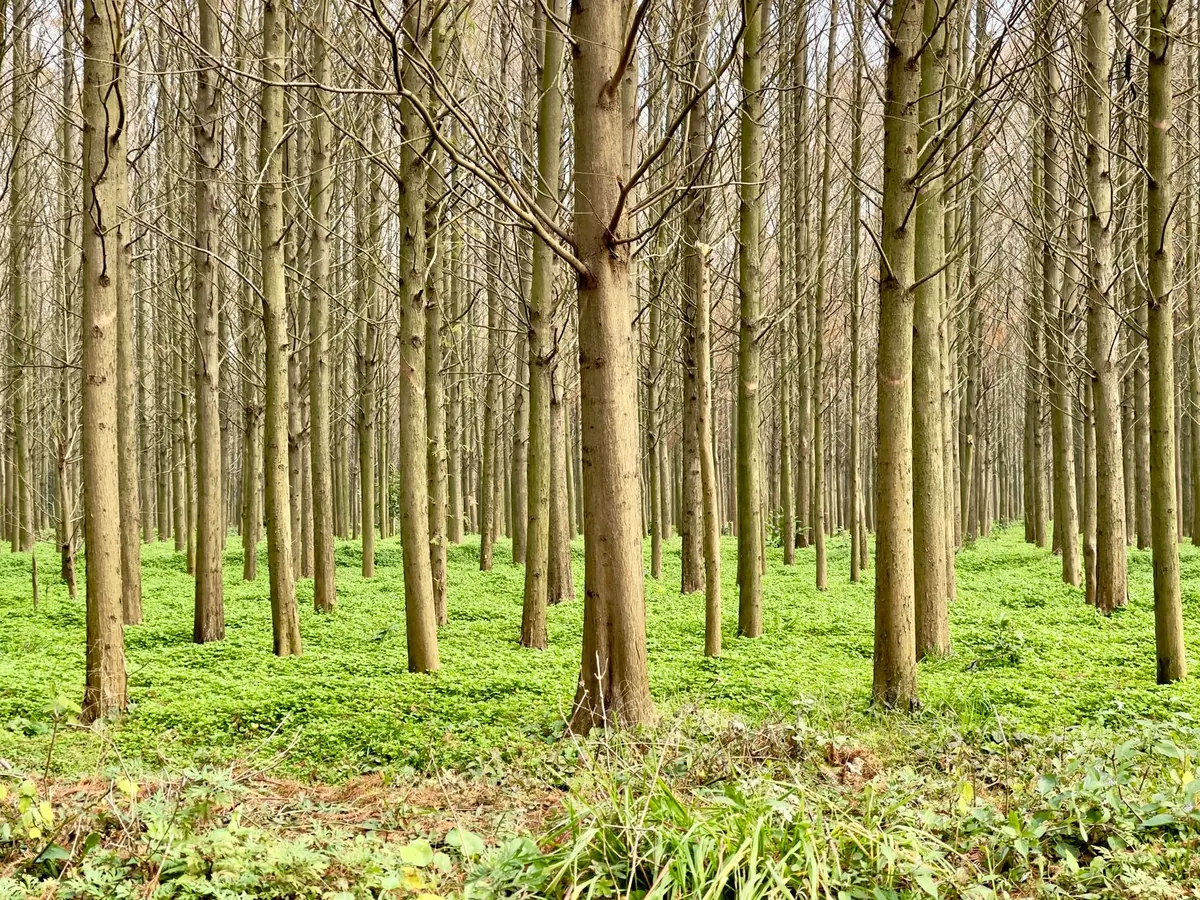
Because it started from bare ground, secondary woodland tends to be even-aged, with trees that all established around the same time. Birch, goat willow, hawthorn, sycamore and ash are typical pioneers. Where planting has happened, you may find straight lines of a single species and little else underneath.
Why the Ecology Diverges
The real difference is not the trees you can see. It is the soil and everything living in it.
Ancient woodland soils have gone centuries without being ploughed, fertilised or drained. That allows a deep, structured leaf litter, a complex fungal network and a resident population of invertebrates that cannot easily cross a field to reach a new wood. Deadwood is part of the picture too: a wood with a continuous supply of standing and fallen timber, generation after generation, supports beetles and fungi that a fifty-year-old stand simply cannot.
Ground flora tells a similar story. Plants such as wood anemone, dog's mercury, wood sorrel and herb Paris spread incredibly slowly — often less than a metre a year, and sometimes barely at all. A wood that has only existed for a century may sit in a landscape full of seed sources and still have none of them.
None of this makes secondary woodland worthless. It just means it is playing a different role, and it will need a few more centuries before it can play the other one.
Field Clues You Can Use
You do not need a survey licence to make a decent guess. Start by walking the boundary and then work inwards.
- Boundary earthworks. A woodbank — a low bank with a ditch alongside — usually marks an old woodland edge. Look for them under the brambles.
- Coppice stools and pollards. Fat, multi-stemmed bases and trees with swollen trunks on short boles point to long management.
- Ground that has never been ploughed. Ancient woodland floors are often hummocky and uneven. Straight ridge-and-furrow, by contrast, means the land was cultivated at some point — so the wood came later.
- Indicator plants, used in groups. Bluebell, wild garlic, early purple orchid, yellow archangel, wood melick and others are associated with old woods. Local lists vary enormously, so treat any single species as a hint rather than proof.
- Veteran trees. Hollowing trunks, dead limbs, fungi and crevices take time to develop.
- Oddities inside a plantation. A conifer block with ancient-looking banks and a few stubborn native plants may well be a PAWS site.
Where the Clues Let You Down
Bluebells are the classic trap. They spread readily along verges and into new woods, so a bluebell carpet beside a housing estate proves very little. Conversely, an ancient wood that was heavily grazed or planted with conifers may have lost most of its indicator species while still being ancient in every legal and ecological sense.
The reliable answer comes from the Ancient Woodland Inventory, held by your local authority, Wildlife Trust or environmental records centre, and shown on national mapping services. If you are recording wildlife or planning work in a wood, check it before you draw conclusions.
The Case for Secondary Woodland
Secondary woods do the heavy lifting in a lot of places. They buffer ancient fragments from wind, spray and disturbance. They link isolated woods into a network that wildlife can move through. They soak up rainwater, store carbon, supply timber and give people somewhere to walk. Many are the only woodland within reach of a town.
Left alone and lightly managed, secondary woodland accumulates the very features it lacks: deadwood, uneven structure, older trees and a richer ground flora. Give it time and it starts to look like the thing we admire in ancient woods.
Putting It to Use on Your Next Walk
Pick a wood you know and try this on a single visit:
- Walk the perimeter first. Note any banks, ditches, old hedgelines or straight plantation edges.
- Look at the ground. Hummocky and mossy, or flat and uniform?
- Find one patch away from paths and count how many indicator plants you can identify. Group evidence matters more than one find.
- Check the Ancient Woodland Inventory for that grid reference when you get home.
- Send anything interesting to your local records centre — those records shape how these woods are protected.
Whichever type you are standing in, walk lightly. Stay on paths in ancient woods, keep dogs out of the ground flora in spring, and leave deadwood where it lies. The difference between the two woods is centuries of patience, and the least we can do is not undo it in an afternoon.
Photo: YouComMedia / Pixabay