Best Woodland Walks in the Peak District for Autumn Colour
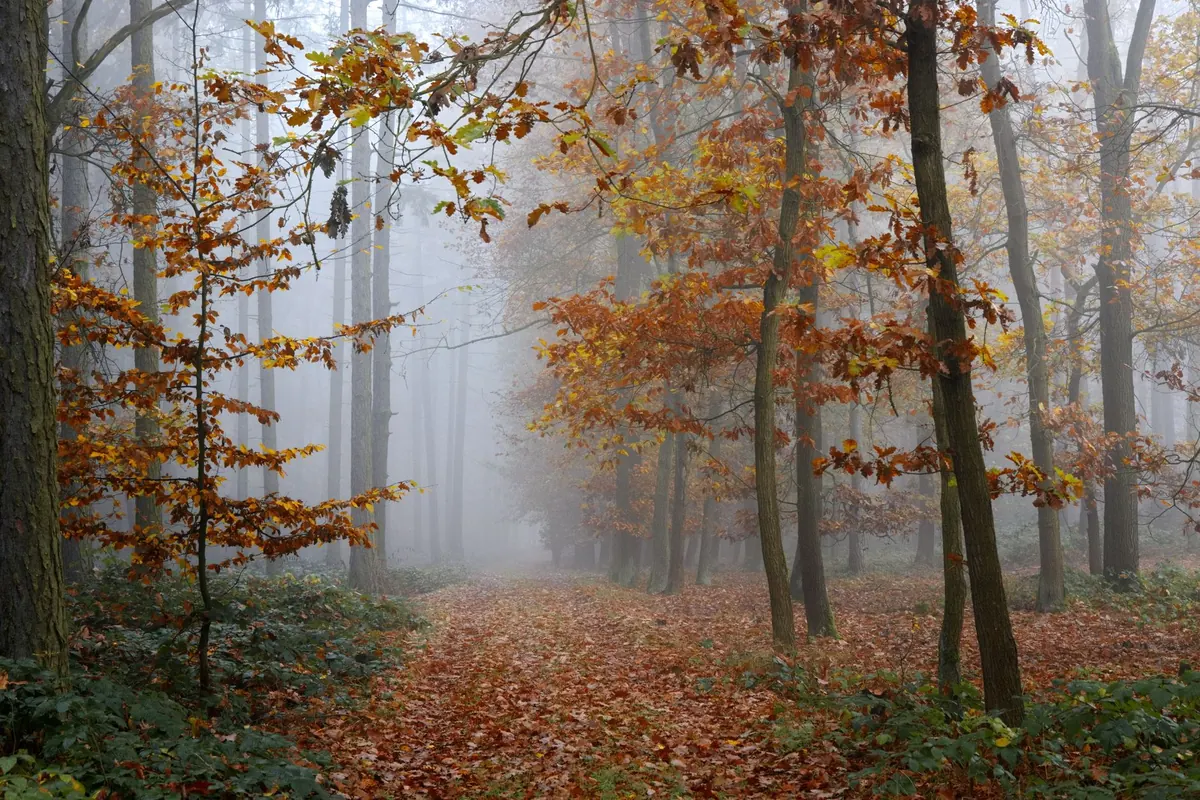
Autumn in the Peak District arrives in stages, and the woods know it before anyone else does. The birches high on the slopes turn first, a thin yellow haze against grey gritstone. The oaks follow, then the beech, which holds its green longest and then goes all at once to copper. What follows are six walks where that sequence plays out well, with notes on timing, ground conditions and the bits that catch people out.
Padley Gorge and Longshaw: birch, oak and tumbling water
Padley Gorge, tucked between Grindleford station and the Longshaw Estate, is the classic autumn walk in the eastern Peak. Burbage Brook drops through a steep, rocky ravine lined with sessile oak and birch, and the trees here are old and contorted enough to carry real colour. Because the gorge sits low and sheltered, leaves often hang on a week or so longer than they do on the tops.
Start from the National Trust car park at Longshaw (pay and display), walk down through the woods and follow the brook to Grindleford. It takes about an hour each way, but the path is rooty, uneven and famously muddy after rain. Train users can reverse it: Grindleford station is a few minutes from the bottom of the gorge.
Worth seeking out
- The stretch just above Grindleford station, where the brook tumbles between boulders.
- Longshaw's open oak woodland, which catches low afternoon light beautifully.
- The cafe and toilets at Longshaw, which make this the easiest of these walks with children.
Kinder Reservoir and William Clough, near Hayfield
Birch gives the Dark Peak its autumn character, and there is plenty of it on the slopes above Hayfield. Park at Bowden Bridge (pay and display) and follow the track up towards Kinder Reservoir, then take the steep path into William Clough. The climb is honest work, but the birch and rowan on the clough sides turn gold in October, and the view back down over the reservoir is worth the effort.
You do not have to go all the way onto the plateau. Turning back at the top of the clough gives you a satisfying half-day with the best of the colour and none of the navigation problems that come with Kinder's featureless edges.
Chatsworth and the beech woods of the Derwent Valley
Beech is the headline tree of late October, and the Derwent Valley around Chatsworth is where to see it. The Stand Wood above the house holds beech and oak on steep ground, while the parkland below is dotted with enormous old oaks that turn slowly from green to bronze.
A public footpath network crosses the park, so you can walk in without buying a ticket, though car parks and the garden are charged. Combine a loop along the river with a wander through Edensor, the estate village, where the trees and the stone buildings seem to have been arranged together on purpose. Midweek mornings are quiet; half-term weekends are not.
Monsal Dale, Chee Dale and the Wye Valley
The Wye Valley between Bakewell and Buxton offers limestone dales with woodland on both slopes and the Monsal Trail running through the middle. From Monsal Head, the path drops down to Headstone Viaduct, and you can then follow the trail in either direction beneath beech on the upper slopes and ash, hazel and wych elm lower down.
For a longer day, head east towards Chee Dale, where the trail passes under the crags and the path uses stepping stones. Those stones flood after heavy rain, so check conditions before committing to that section, and take a spare pair of socks if you like dry feet.
Froggatt and Curbar Edges
Below the gritstone edges the woodland is a tangle of oak, birch, rowan and holly, growing out of boulders and thin soil. The trees are small and wind-shaped, but there are enough of them to create whole banks of colour below the crags.
Park at Curbar Gap or the Froggatt Edge car park, both small and both pay and display, and both filling early on a bright October Sunday. Walk the edge path for the views, then drop into the woods on the eastern side for the colour. The light here is best in the two hours before sunset, when the low sun catches the tops of the birches and the gritstone turns pink.
Linacre Reservoirs, near Chesterfield
If you want autumn colour without a climb, Linacre's three reservoirs sit in a bowl of mixed woodland on the western edge of Chesterfield, near Cutthorpe. Beech, oak and larch grow right down to the water, and there is a network of waymarked trails, mostly on good surfaces.
The circular route around the upper reservoir is the pick of them, and it works well for mixed-ability groups, pushchairs with decent wheels and anyone recovering from injury. Expect it to be busy: easy access and good colour are a popular combination.
Timing, kit and practicalities
Colour varies every year, and the rough order is birch first, from late September; oak through early to mid-October; beech in mid to late October, sometimes into the first days of November. A windy week can strip a wood bare almost overnight, so if you have one free day, go sooner rather than later.
- Waterproof boots and, for Padley Gorge or Chee Dale, gaiters. These paths are genuinely muddy.
- A walking pole if you are unsteady on wet roots or limestone slabs.
- A paper map or a downloaded one. Phone signal is patchy in the dales. OS Explorer OL1 covers the Dark Peak, OL24 the White Peak.
- Cash or a card, and coins for car parks where the machine has no signal.
- A flask, food and a headtorch. By late October, sunset comes before five o'clock.
- Lead and poo bags for dogs. Livestock graze in many of these woods, and autumn is the deer rut, so keep well back from rutting deer and never let a dog chase them.
Check for ticks after walking through bracken or long grass, particularly on legs and around the waistband. Take litter home, leave fallen wood where it is, and keep to the path where erosion is obvious — these woods take heavy footfall, and the roots and leaf litter do not recover quickly.
Photo: Karel Drozda / Pexels