British Bluebell Season: A Month-by-Month Guide to Woodland Blooms
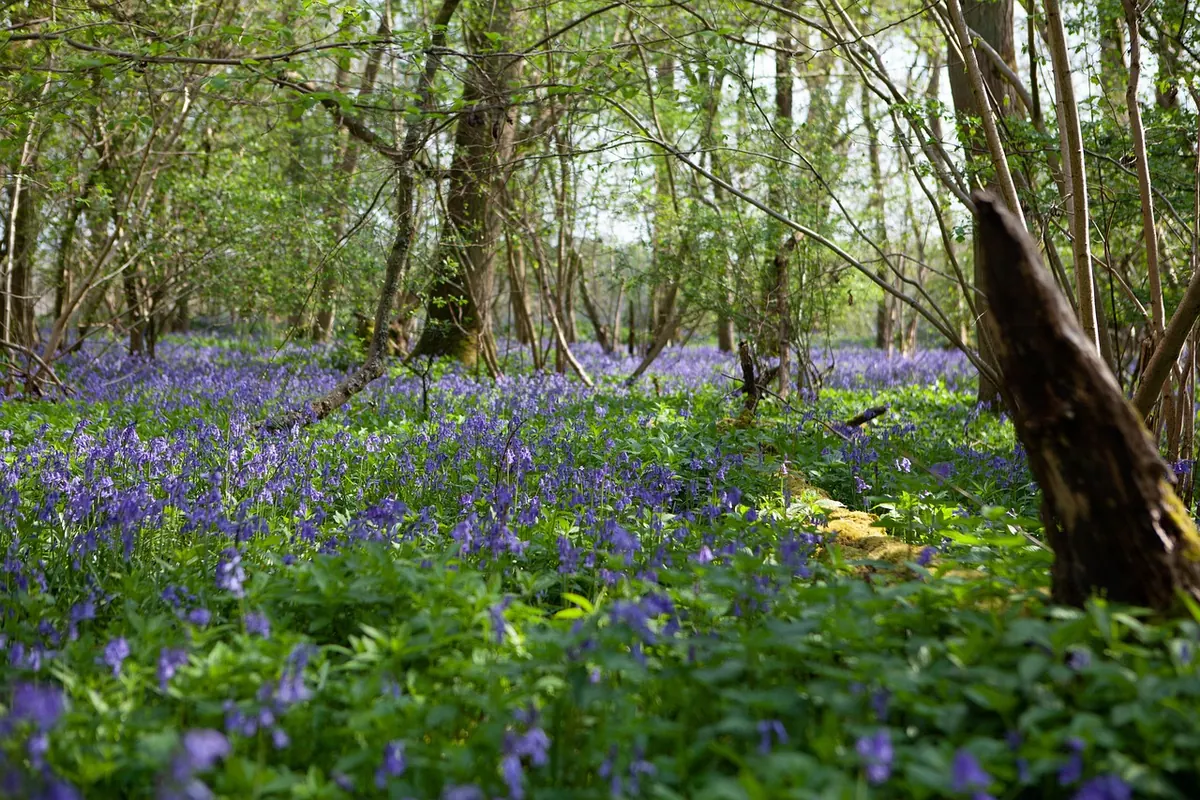
The first bluebells of the year usually open in sheltered Cornish lanes in late March, while the last ones in a Highland oakwood may still be nodding into the first week of June. Between those two points runs a season that rolls north and uphill over roughly ten weeks, and it shifts by a fortnight or more from one spring to the next. Knowing how that wave moves makes it much easier to plan a walk and catch a wood at its best.
The Shape of the Season
Bluebells are working to a deadline. They need to flower, set seed and top up the bulb before the oak, ash and beech canopy closes overhead and takes the light. That is why they flower in spring and spend the rest of the year below ground. Cool, damp conditions stretch the display out; a hot, dry April or May cuts it short. In most woods the finest colour lasts two to three weeks, though the season from first flower to last is considerably longer than that.
Two things decide everything else: latitude and altitude. Head north, climb higher, or drop into a north-facing valley, and the timetable slips.
Month by Month
January and February
Very little to see. The bulbs are in the soil, drawing on stores laid down the previous summer. In mild western districts, the first narrow strap leaves can be showing by late February. Primroses, lesser celandine and wood anemone usually run a few weeks ahead of bluebells and make useful markers for what is coming.
March
The earliest flowers appear in the mildest corners: Cornwall and south Devon, the Isle of Wight, Pembrokeshire, sheltered valleys in Sussex and the Isle of Man. Late March is typical, though plenty of years push it into early April. Elsewhere, leaves are up and buds are visible but tight. A cold snap now simply pauses things; the plants resume when the temperature lifts.
April
This is the month most people think of. Lowland woods across southern England, the Midlands, East Anglia and most of Wales come into colour, often peaking somewhere between the middle of the month and the first days of May. The beechwoods of the Chilterns, the Cotswold escarpments, the Weald and the old oak woods of the Welsh borders are usually at their best in the second half of April. Sheltered, sunny woods can be a full fortnight ahead of the damper, shadier slopes in the same parish.
May
Attention moves north. Woods in northern England, southern Scotland and the uplands of Wales peak in May, as do the late, shaded woods in the south that were still green when their neighbours were blue. Mid to late May is the safest window for Cumbria, Northumberland, the Scottish Borders and the oakwoods of Argyll. Beech woods on thin, free-draining chalk can run a touch earlier than neighbouring clay woods, even at the same latitude.
June
The last stragglers: high ground, north-facing slopes and the cooler woods of northern and eastern Scotland, sometimes into the first fortnight of June. By now the southern displays have set seed. Pods swell, the leaves yellow, and the whole colony quietly withdraws until next spring.
How Weather Changes the Timetable
A mild, wet winter followed by a warm March tends to bring bluebells forward; a cold March with late frosts holds them back. A hard frost can brown the earliest flowers, though unopened buds in the same spike usually survive and open later. A dry spring shortens the flowering period noticeably.
Within a single wood, look at the ground. South-facing slopes and light, well-drained soils warm first and flower first. Frost hollows at the bottom of a valley, where cold air pools on still nights, can be two weeks behind the slope above them. It is entirely possible to walk from full colour into tight bud in ten minutes.
Which Woods to Look In
Bluebells are a classic indicator of ancient woodland, land that has been continuously wooded for centuries. They also turn up in old hedgerows, churchyards, estate parkland and on coastal cliff slopes where scrub has never been cleared. The richest displays tend to be on well-drained slopes under oak, ash or beech, often with hazel coppice and a history of light management. Dense conifer plantations rarely deliver much, though bluebells sometimes cling on along the edges where broadleaf trees remain.
Telling Native Bluebells from Spanish Ones
If you are looking closely, it is worth knowing what you are seeing. Spanish bluebells, a garden plant, have spread widely and hybridise freely with the native species.
- Native bluebell: deep violet-blue, with flowers hanging mainly to one side of a drooping stem. Narrow leaves, creamy white pollen, and a strong sweet scent.
- Spanish bluebell: paler blue, sometimes pink or white, with flowers spaced around an upright stem. Broader leaves, blue pollen, and little scent.
- Hybrids: common near gardens and the sites of old ones, and often hard to place with confidence.
Never dig up wild bulbs. Uprooting native bluebells without permission is against the law, and it damages a colony that may have taken decades to establish. Photographs and notes are the better record.
Planning a Visit
Bluebell woods are popular, and the plants are more fragile than they look.
- Follow the season rather than the calendar. Local wildlife trust sightings pages and community nature groups are the quickest way to hear that colour has started nearby.
- Aim for the first week or so of full colour. Once the flowers begin to fade they turn a greyish lilac and lose their scent.
- Go early. A warm, still morning or a late afternoon gives the strongest scent and softer light.
- Stay on the path. Trampled leaves cannot feed the bulb for next year, and compacted soil is slow to recover.
- Keep dogs close and out of the flowers, and leave seed heads where they are.
- For photography, overcast light or backlighting works well; crouch at the edge of the path rather than lying among the plants.
Group visits need a little more thought, especially in small reserves, so check with the landowner or the site's managing body before you arrange one. Then all that is left is to pick the right week, find a quiet slope, and stand still for a minute while the wood does the rest.
Photo: TheOtherKev / Pixabay